Diabetes-friendly dessert recipes
Published June 2026
Expert contributor: Rebecca McPhee, Accredited Practising Dietitian and Health Coach Consultant, Diabetes Australia
Words by Sabrina Rogers
Satisfy your sweet tooth with these expert-backed diabetes-friendly dessert and snack recipes, designed to be delicious and nutritious.
More than 1.3 million Australians are living with type 2 diabetes, the fastest-growing chronic condition in the country. And it isn’t just older Australians who are affected – rates of type 2 diabetes in people in their 20s and 30s increased by 44% in the past decade.
“People with a family history of type 2 diabetes or from certain cultural backgrounds have an increased risk, and others may develop it because of increasing age, certain medical conditions or medications,” says Rebecca McPhee, Accredited Practising Dietitian and Health Coach Consultant at Diabetes Australia.
“But in Australia, our high rates of type 2 diabetes are mainly driven by lifestyle factors, including overweight and obesity. In 2022, about 66% of Australians were overweight or obese, putting them at high risk.”
The good news? A few simple changes to your diet can help reduce your risk of developing type 2 diabetes – or help you manage it, if you’ve already been diagnosed.
What’s the best food for type 2 diabetes?
While there’s no such thing as a ‘diabetes diet’, eating a balanced, nutrient-dense diet and being mindful of your sugar and carbohydrate intake can help support steady blood glucose levels and overall wellbeing.
“Carbohydrates are digested in the body to form glucose [a type of sugar] in the blood, so reducing your risk of type 2 diabetes is all about carbohydrate management,” explains Rebecca. “Sugar is a type of carbohydrate, so that includes managing your sugar intake as well.
“There are two parts to being carb smart: choosing low-GI carbs [wholegrain or high-fibre carbohydrates that release glucose more gradually into your bloodstream] and eating them in smaller quantities. You should balance this with a good amount of lean protein, healthy fats and vegetables.”
Diabetes-friendly desserts and snacks
Eating healthily doesn’t mean you have to give up enjoying the occasional treat. A sweet tooth can still be satisfied with a few healthy swaps.
“So many packaged desserts and snacks claim to be healthy, but are high in sugar, refined carbohydrates and unhealthy fats,” says Rebecca. “Try not to be influenced by marketing, and plan ahead to bring snacks from home.”
Try these healthy swaps for your favourite treats:
- plain Greek yoghurt topped with berries
- a carrot cake muffin (recipe below)
- a few squares of dark chocolate (at least 70% cocoa)
- apple slices with a tablespoon of peanut butter
- baked apples or pears sprinkled with cinnamon
- fresh berries, cherries, plums or apricots
- hot spiced nuts (recipe below)
- vegetable sticks with hummus
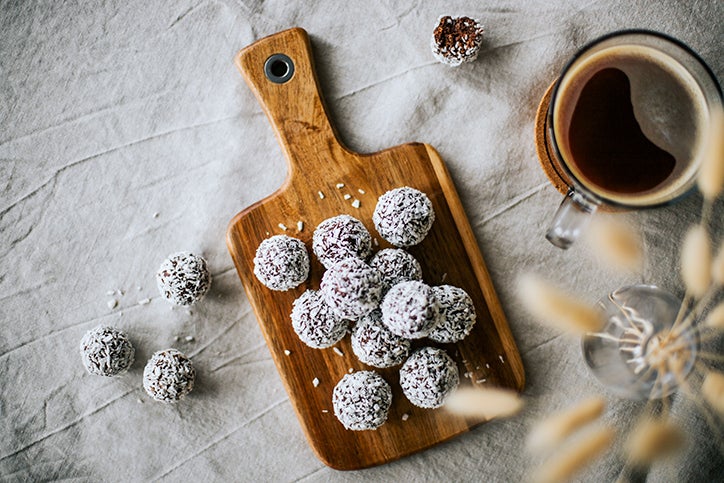
- chocolate fudge balls (recipe below)
- choc oat protein cookie (recipe below).
Cooking from scratch gives you even more control over what goes into your meals. These four delicious recipes Rebecca created are simple, satisfying and designed to support balanced eating.
Carrot cake muffins
Prep: 10 minutes
Cook: 15 minutes
Makes: 12
Ingredients
- 1 cup wholemeal self-raising flour
- 1 tsp bicarbonate of soda
- 1 tsp cinnamon
- 1/3 cup rolled oats
- 2 eggs
- 2 large ripe bananas, well mashed
- 2 tsp raw or low-GI honey, or pure maple syrup
- 1/3 cup extra virgin olive oil
- 2 medium carrots, grated
- ½ cup chopped prunes or blueberries
- ¼ cup walnuts, chopped
Method
- Preheat oven to 180°C. Grease a 12-cup muffin tin.
- Sift flour, bicarbonate of soda and cinnamon into a bowl. Stir in oats.
- In a separate bowl, whisk eggs, then stir in banana, honey and olive oil.
- Make a well in the centre of the dry ingredients. Pour in egg mixture and stir to combine.
- Stir in carrots, prunes (or blueberries) and walnuts. Add 1 teaspoon of hot water if the mixture is too dry.
- Spoon batter into the prepared muffin tin. Bake for 15 minutes or until a toothpick inserted into the centre of a muffin comes out clean.
Nutrition per serve (1 muffin)
Kilojoules: 713kJ
Protein: 3.2g
Fat: 8.9g
Carbohydrates: 18.1g
Fibre: 2.9g
Sodium: 198mg
Chocolate fudge balls
Prep: 10 minutes
Makes: 12
Ingredients
- 1 cup fresh dates, pitted (medjool dates are best)
- 1 cup roasted almonds or walnuts
- 1 tbsp pure cocoa powder, sifted
- 1 tsp vanilla extract
- ½ cup desiccated coconut
Method
- Blend dates, nuts, cocoa powder and vanilla in a food processor.
- Using your hands, roll into 12 small balls.
- Roll balls in coconut until well coated. Repeat with remaining mixture and coconut.
- Store in an airtight container in the fridge.
Nutrition per serve (1 ball)
Kilojoules: 521kJ
Protein: 2.6g
Fat: 7.9g
Saturated fat: 2.7g
Carbohydrates: 11.6g
Fibre: 2.7g
Sodium: 3.5mg
Hot spiced nuts
Prep: 2 minutes
Cook: 8 minutes
Serves: 4 (¼ cup per serve)
Ingredients
- 2 tsp olive oil
- 1 tsp Moroccan spices or a 1 tsp mix of ground cumin, coriander, chilli and salt
- 1 cup mixed raw nuts
Method
- Heat oil in a frying pan over medium heat. Add spice mix and stir for a few seconds until fragrant.
- Add nuts and stir until well coated in spice mix and starting to brown.
- Remove from heat as soon as you smell nuts roasting.
- Transfer to a plate to cool before serving.
Nutrition per serve (¼ cup)
Kilojoules: 1,073kJ
Protein: 6g
Fat: 24g
Saturated fat: 2.8g
Carbohydrates: 2.7g
Fibre: 3.1g
Sodium: 29.7mg
Choc oat protein cookies
Prep: 5 minutes
Cook: 15 minutes
Makes: 8
Ingredients
- 2 ripe bananas
- 1 cup oats
- 1 scoop vanilla protein powder
- 1 large egg
- ¼ tsp vanilla extract
- ¼ tsp cinnamon
- Pinch of salt
- 2 heaped tbsp 100% peanut butter
- ¼ cup sugar-free choc chips or walnuts
Method
- Preheat oven to 180°C. Line a baking tray with baking paper.
- In a large bowl, add all ingredients and mix thoroughly to combine.
- Place tablespoonfuls of mixture on baking tray.
- Bake for 15 minutes or until golden.
Nutrition per serve (1 cookie)
Kilojoules: 521kJ
Protein: 7.7g
Fat: 5.6g
Saturated fat: 1.7g
Carbohydrates: 9.7g
Fibre: 3.1g
Sodium: 54mg
Other lifestyle habits to keep blood glucose levels in check
Here are a few more of Rebecca’s tips to control your blood glucose levels and reduce your risk of type 2 diabetes.
- Read food labels: as a general rule, low-sugar snacks have less than 5g of sugar per 100g.
- Bake smart: reduce the amount of sugar a recipe recommends or sweeten your baked goods naturally with bananas, apples or a little honey or pure maple syrup.
- Maintain a healthy weight: losing just 5 to 10% of your body weight can significantly improve your blood glucose levels.
- Move your body: both cardio and strength training help reduce your risk of type 2 diabetes.
- Drink less: alcohol is high in kilojoules and can contribute to weight gain.
- Manage stress and sleep: high stress and poor sleep can increase the risk of type 2 diabetes.
“Making small, consistent changes will be easier to stick to and more achievable,” Rebecca advises. “It’s okay to have a treat sometimes.”
Looking for weight management support?
We’re helping eligible members access the evidence-based CSIRO Total Wellbeing Diet*. Created by Australia’s national science agency, the program combines a higher protein, low-GI eating plan with proven weight management tools to help improve habits and create lifelong positive behaviours.
* Available to RT Health members with Hospital Cover who are aged 18 or over, have a body mass index of 28 or above, and/or have multiple lifestyle risk factors like smoking, physical inactivity and poor nutrition.
This wellbeing message is brought to you by the team at RT Health, a division of HCF, The Hospitals Contribution Fund of Australia Limited (ACN 000 026 746). This communication contains information which is copyright to HCF. It should not be copied, disclosed or distributed without the authority of HCF. Except as required by law, we do not represent, warrant and/or guarantee that this communication is free from errors, virus, interception or interference. All reasonable efforts have been taken to ensure the accuracy of material contained on our website. It’s not intended that this website be comprehensive or render advice. The information provided on this website is general information only and may not be suitable to your individual circumstances or health needs. Please check with your health professional before making any dietary, medical or other health decisions as a result of reading this website.