How to look after your teeth (and make the most of dental cover)
Published September 2025
Expert contributors: Dr Monica Farrelly, Oral Health Promoter, Australian Dental Association; Dr Mayuri Hughes, Dentist at HCF Dental Centre
Words by Sabrina Rogers-Anderson
From brushing basics to booking check-ups, here’s how your dental cover can work harder for your oral health.
It’s no secret that taking care of your teeth can help prevent tooth decay, cavities and gum disease. But did you know it can also help protect you against serious health conditions like heart disease, diabetes, Alzheimer’s disease, lung conditions, inflammatory bowel disease, and pregnancy and birth complications?
“If there’s a lot of bacteria, plaque or gingivitis [early gum disease] in your mouth, it can contribute to inflammation throughout your body that can increase your risk of heart concerns, type 2 diabetes and several other health issues,” says Dr Monica Farrelly, Oral Health Promoter at the Australian Dental Association.
That’s why good oral hygiene and regular dental check-ups are so important. Your dentist can pick up early signs of decay or disease and give you tailored advice on how to care for your teeth.
The right dental cover can help you avoid pain, discomfort and unexpected costs down the track. Here’s how to make the most of your dental cover, including what to do between dentist appointments.
How to prevent tooth decay: the basics
With one in five Aussies brushing once a day or less, and 75% rarely or never flossing, we need to pick up our dental health game.
“It takes two minutes to do a good job brushing and keep plaque and bacteria off the tooth surface,” says HCF Dental Centre Dentist Dr Mayuri Hughes.
To keep your teeth and gums healthy, follow these simple but essential rules every day.
- Brush twice a day – after breakfast and before bed – for two minutes at a time. “If you brush too quickly, you may brush too hard and wear down your teeth and gums,” says Dr Hughes.
- Use a toothbrush with soft bristles. Electric toothbrushes are usually more effective at removing plaque and reducing the risk of gum disease than manual toothbrushes.
- If you’re using a manual toothbrush, gently brush in circles. If you’re using an electric toothbrush, slowly guide it along all the surfaces of your teeth and gumline. In both cases, brush the inside, outside and top of your teeth.
- To strengthen and protect your teeth from the bacteria that cause tooth decay, limit the amount of sugar you eat and brush with fluoride toothpaste.
- Spit out the toothpaste but don’t rinse afterwards with water – that way, the fluoride can do its work.
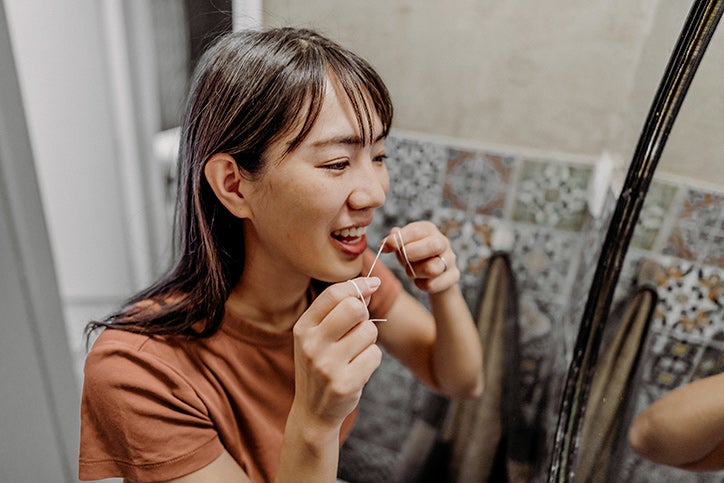
- Floss at least once a day to remove food and plaque from between your teeth. You can use dental floss, floss picks or interdental brushes, depending on your preference.
Unless your dentist recommends mouthwash, you don't need it for everyday use.
Looking after kids’ teeth
Good oral hygiene habits start in childhood. “There's a big misconception that baby teeth aren’t important, but if children lose their baby teeth early, it can cause crowding or other issues with adult teeth,” explains Dr Farrelly. “We want to get children in the routine of brushing and flossing from a young age.”
Parents can brush their children’s teeth with water only and an age-appropriate toothbrush until they’re 18 months old. “We recommend using fluoride toothpaste from 18 months and starting to floss as soon as teeth are touching [each other],” says Dr Farrelly.
Kids can struggle to brush their back teeth properly, so parents should do it for them until they’re around the age of six or seven, she advises. “Then, kids can start having a go and parents can do a second brush if necessary.”
Minimising sugar in your child’s diet is also crucial for their oral health. “Many parents don’t realise how much sugar is in a lot of processed foods,” says Dr Farrelly. “Some kids have juice every day and it’s very high in sugar.”
When to see a dentist
You should see your dentist every 6 to 12 months, or as often as they recommend. While this might seem like a lot, regular check-ups can help detect dental problems early and avoid complex and expensive treatment down the track.
“For most patients, 6 months is a good timeframe,” says Dr Farrelly. “A lot of plaque or tartar [calculus] can build up on your lower bottom teeth during that time. You can’t remove it yourself, so it's important to have a professional cleaning to remove it because tartar can contribute to gum disease."
During your check-up, your dentist will remove plaque and calculus with special instruments, clean and polish your teeth, and apply a fluoride treatment. The benefits of fluoride treatment include protecting teeth against decay, repairing weak spots in teeth that could become cavities, and saving money on future dental treatments.
“Regular check-ups also allow us to visually check the teeth and soft tissue to make sure they’re healthy,” adds Dr Farrelly. “Most dentists also do an oral cancer screening by checking the tongue and the back of the throat. All of these conditions can progress quickly, so it's important to have those timestamps to make sure nothing is missed.”
You can take your child to see the dentist when they get their first tooth or when they turn one (no later than their second birthday). Your dentist will tell you how often your child should have dental check-ups after that, but it’s generally at least once a year.
How to get the most out of your dental cover
While regular dentist visits are crucial for good oral health, nearly 18% of Aussies skipped or delayed necessary dental care in FY2022–23 due to the cost. But putting off dental care can end up being more costly in the long run. Having extras health insurance with dental cover can help offset the cost of dental check-ups.
The dental treatments you can claim will depend on your level of cover. For example, if you have a basic level of extras cover, it will usually include general dental cover, and you’ll be able to claim for things like check-ups, regular cleaning, small fillings and X-rays. If your extras cover includes major dental, you can claim for more complex (and more expensive) procedures like crowns, removing wisdom teeth, bridges and root canals.
Our More for Teeth program allows you to claim 100% back on a range of the most common diagnostic and preventative services through a More for Teeth provider*, including one check-up per calendar year, scale and clean, fluoride treatment and mouthguards. Data shows that members who didn’t access More for Teeth were 1.5 times more likely to need major dental work, so accessing the program can make a real difference and save you money.
Our More for Teeth network spreads right across Australia with over 10,000 providers. Plus, RT Health members get the same level of service and eligibility of cover at HCF Dental Centres. To find a More for Teeth dentist near you, use our easy-to-use search tool.
We’re here to help
We get it. Private health insurance can be complicated, but we’re here with you every step of the way to help you get more value from your cover.
Our Member Care team can answer any questions you have about your cover. Give us a call on 1300 886 123 or get in touch via email to help@rthealth.com.au
* 100% back/no-gap at More for Teeth providers is available to members with RT Health extras cover. Waiting periods and annual limits apply. Providers are subject to change. We recommend that you confirm your chosen provider is part of More for Teeth prior to your appointment.
This wellbeing message is brought to you by the team at RT Health, a division of HCF, The Hospitals Contribution Fund of Australia Limited (ACN 000 026 746). This communication contains information which is copyright to HCF. It should not be copied, disclosed or distributed without the authority of HCF. Except as required by law, we do not represent, warrant and/or guarantee that this communication is free from errors, virus, interception or interference. All reasonable efforts have been taken to ensure the accuracy of material contained on our website. It’s not intended that this website be comprehensive or render advice. The information provided on this website is general information only and may not be suitable to your individual circumstances or health needs. Please check with your health professional before making any dietary, medical or other health decisions as a result of reading this website.